banner
User Icon Houston
/ Categories: The Basics
0
  Print

Placing a Revision and Uploading Additional Files

We want to make sure our order placement experience is as smooth as possible be it your 1st or 100th order with us.

Today we will go over placing a revision for a change on your design and adding a new file for our staff to reference while making the necessary adjustments.

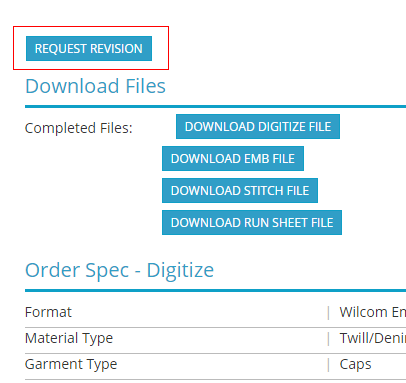
Img 1 – Request Revision button on Order Page
  1. Open the page of the order you would like us to revise.
  2. Click on the Request Revision button at the top of the order page(img 1).
  3. Type in your revision notes for our staff to follow(img 3).

Once Submitted, your request will go to our artists for the necessary adjustments to be made.

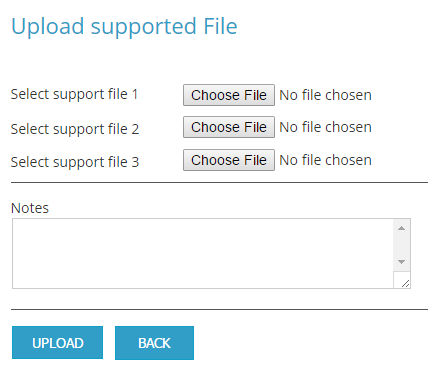
Img 2 – You can add up to 3 files to any revision.

There is one additional, and very helpful, step to making the revision process be as accurate as possible, and that is sending us a file of your stitchout or print, or even a drawing on top of our proof, so that we can see what issues are caused by the art we provided, and help us provide the best solution or fix.

To add additional files to your order in a revision request, simply check the checkbox underneath the comments section as illustrated below(img 3)
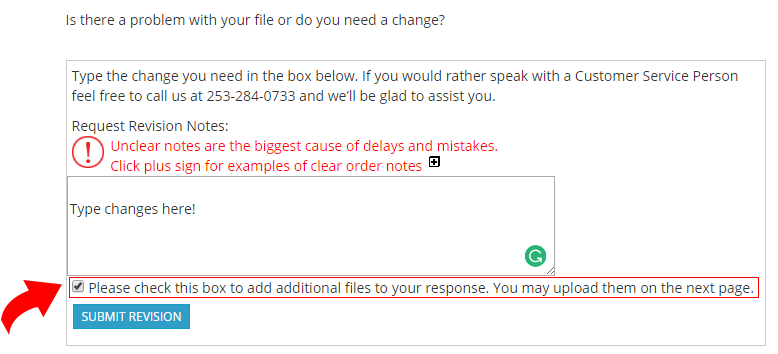
Img 3 – Revision text box and add additional files option. Clicking submit with the box checked will open Img 2

This is also a good way to submit new, or replacement elements.

Previous Article Optimizing your Vinyl Orders!
Next Article Our Award Winners!
  Rate this article:

0 / 5. 0

0 comments on article "Placing a Revision and Uploading Additional Files"

Leave a comment

Your email address will not be published. Required fields are marked *

*

Where Your Art Goes: A Story from Sebago Lake

Ignition Impact: Customer Creations At Ignition Drawing, we know our team spends every day creating artwork that fuels thousands of products, including patches, engravings, prints, signage, and more. But what we don’t always see is where those designs end up… or the stories they become part of. Today, we want to share one of those […]

Continue Reading →

The Art of the Dot: Why Halftones Matter More Than You Think

Ever wonder how printers achieve smooth gradients and realistic shading using only one ink color? The secret lies in halftones — the tiny dot patterns that turn solid ink into subtle tonal variations. What are Halftones? Halftones are dot patterns used to simulate tonal variation with a single ink color. By varying dot size and […]

Continue Reading →

Winners of our First Ever Digitize & Win contest!

We’re excited to share the 1st place winner of “Digitize & Win” and it’s easy to see why this design stood out. You no like, you no eat! This embroidered portrait of two gentlemen in their formal best came out beautifully. The suits have great blended detailing that adds nice depth, the faces are clean […]

Continue Reading →

Preparing for the Job: Get Cleaner Embroidery Sew Outs Every Time

Have you ever noticed that your embroidery sew outs on backing material look rough, fuzzy or feathered? This happens because embroidery backing doesn’t have a weave or grain to hold stitches in place. Without this structure, needlepoints shift into nearby holes and bunch up, leaving even the best underlay looking uneven and messy. That’s why […]

Continue Reading →

Vector vs. Raster Art

What Every Customer Should Know for Better Print Results At Ignition Drawing, we believe that great artwork begins with understanding the foundations. Whether you’re designing for embroidery, screen printing, or digital decoration, knowing the difference between vector and raster art is essential. These two image types serve different purposes, and choosing the right one can […]

Continue Reading →

How to Prevent Puckering in Fabrics

Puckering can ruin an otherwise perfect embroidery. Here’s how to avoid it, especially with tricky fabrics like performance wear. 1. Manage Satin Stitches Wide satin stitches (over 4 mm) often cause puckering, especially on stretchy fabrics. Keep stitches under 4 mm to avoid pulling the fabric. The wider the satin stitch, the more likely the […]

Continue Reading →

What fabric type should I choose for my order?

When placing an order for digitizing embroidery, one of the most common questions is, “What fabric type should I choose?” This decision is crucial as it impacts the quality and precision of the embroidery. Understanding the fabric type you will be working with helps us tailor the digitizing process to ensure the best possible results.  […]

Continue Reading →

Transform Your Apparel with Distress Overlays in DTF Printing

Direct to Film Transfers (DTF) What is distress, and how is it utilized in DTF printing? Distress is a design technique where deliberate imperfections are added to the artwork digitally before printing. This overlay reduces the amount of ink deposited, resulting in a softer feel on the garment and allowing for greater flexibility and breathability […]

Continue Reading →
123456