banner
User Icon Christine Go
/ Categories: The Basics, Vector
0
  Print

Where Your Art Goes: From Vector Lines to Living Stories

Every project starts somewhere simple, often with a reference image. But what happens between that starting point and the final physical artwork is where the real work lives.

In this case, that transformation began with Ignition Drawing.


Step One: Translating the Image

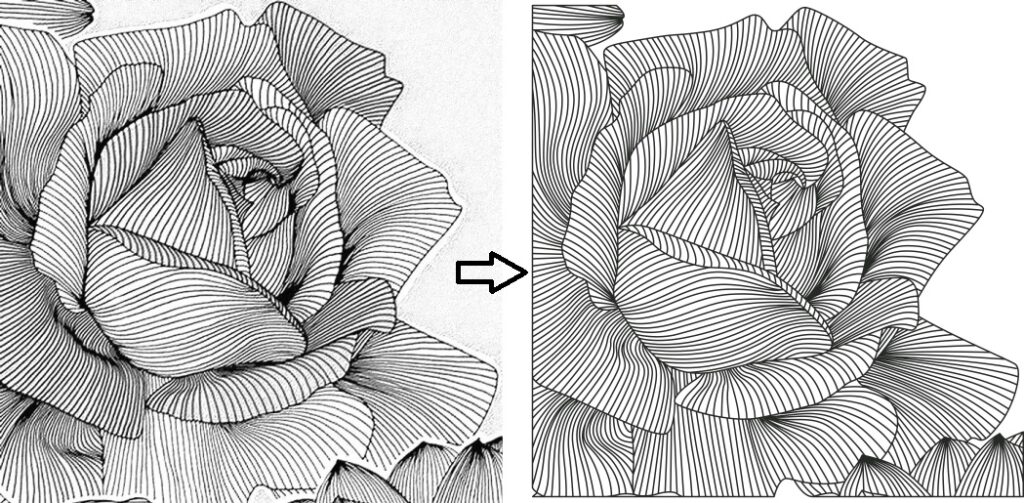
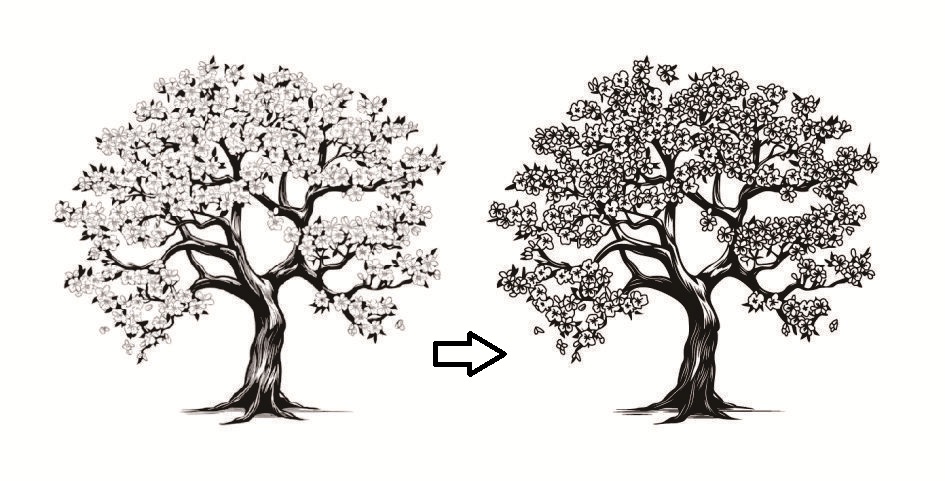
We receive two images from our customer, a rose and a cherry blossom tree. For both, the original artwork came in as detailed raster images. Beautiful, but not yet usable for precision cutting or layered construction.

Ignition Drawing hand-drew these into clean, production-ready vector files (shown on the right).
This process required:

-redefining every contour with precision
-simplifying complexity without losing character
-structuring artwork for layer separation and depth

You can see the shift clearly:

-organic lines become consistent, controlled paths
-dense detail becomes clean, repeatable geometry

Nothing is lost, but everything becomes usable. This is the step that makes the final product possible.


Step Two: From Vector to Object

With the vector foundation in place, SketchBlueStudio transformed the files into dimensional, layered artwork.

The Cherry Blossom Tree

Originally designed as a family tree, this piece had to solve a scale challenge: too many names for the branches alone.

The solution:

-move names into the surrounding border
-keep the tree as the visual anchor
-build depth through multiple stacked layers
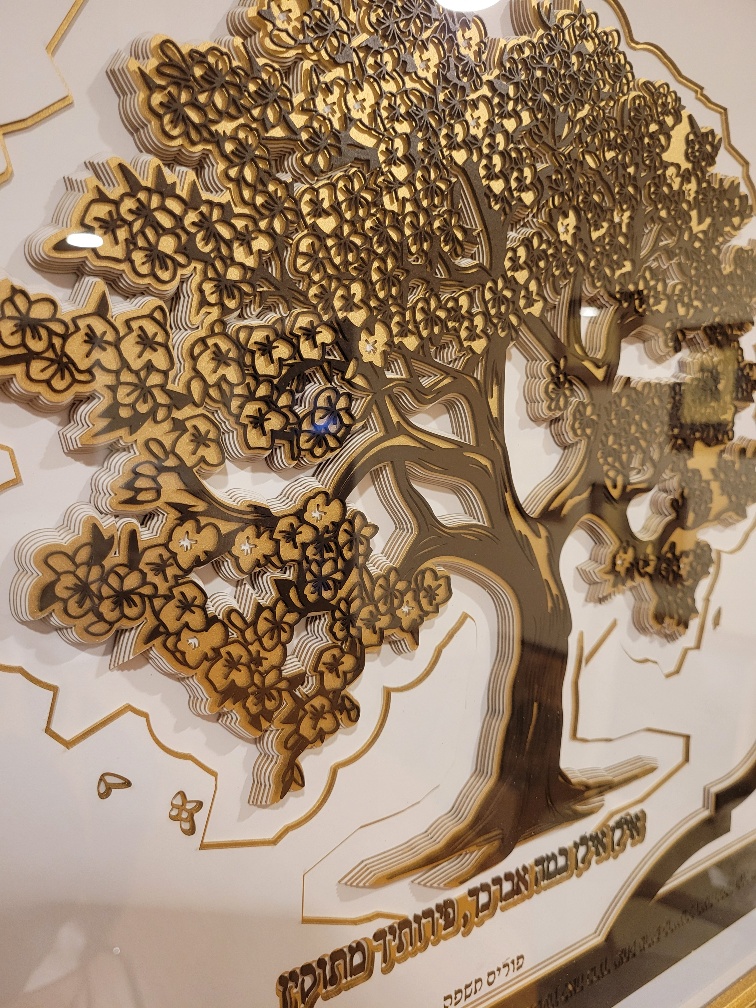
The final result is a structured, multi-layered composition featuring Hebrew names and dates; clear, balanced, and highly personal.
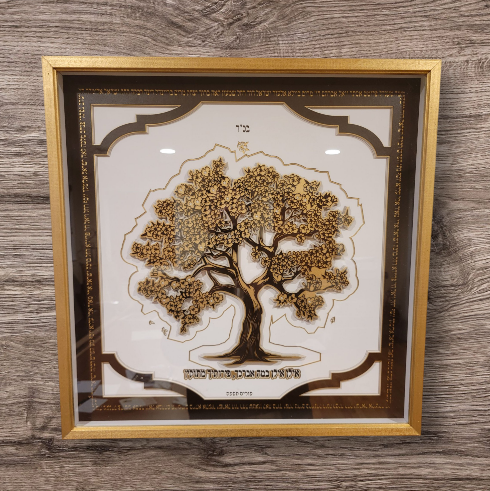
👉https://www.etsy.com/listing/1880122352/family-tree-multi-layered-paper-art


The Rose

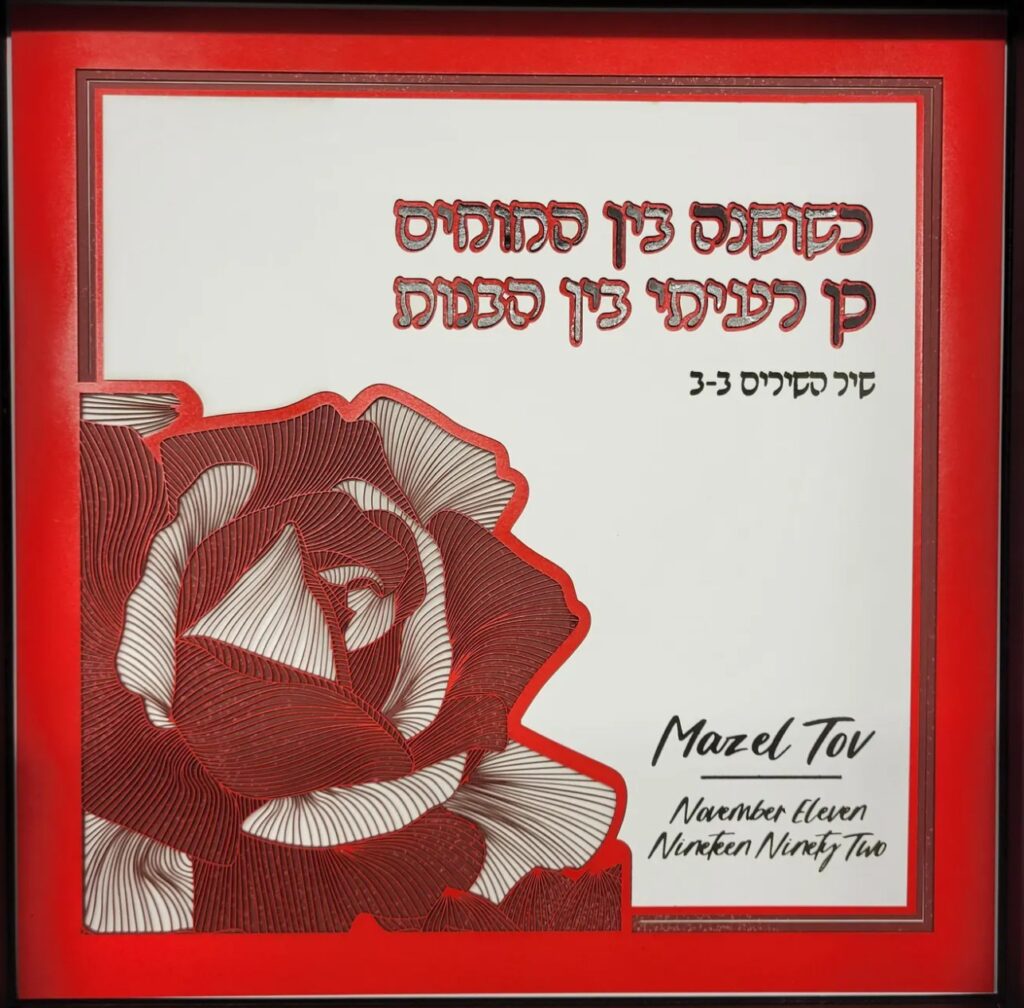
The rose takes a more intimate direction. Created as a 32nd anniversary gift, it features a line from the Song of Songs:

“You among your friends are like a rose among thorns.”

Song of Songs
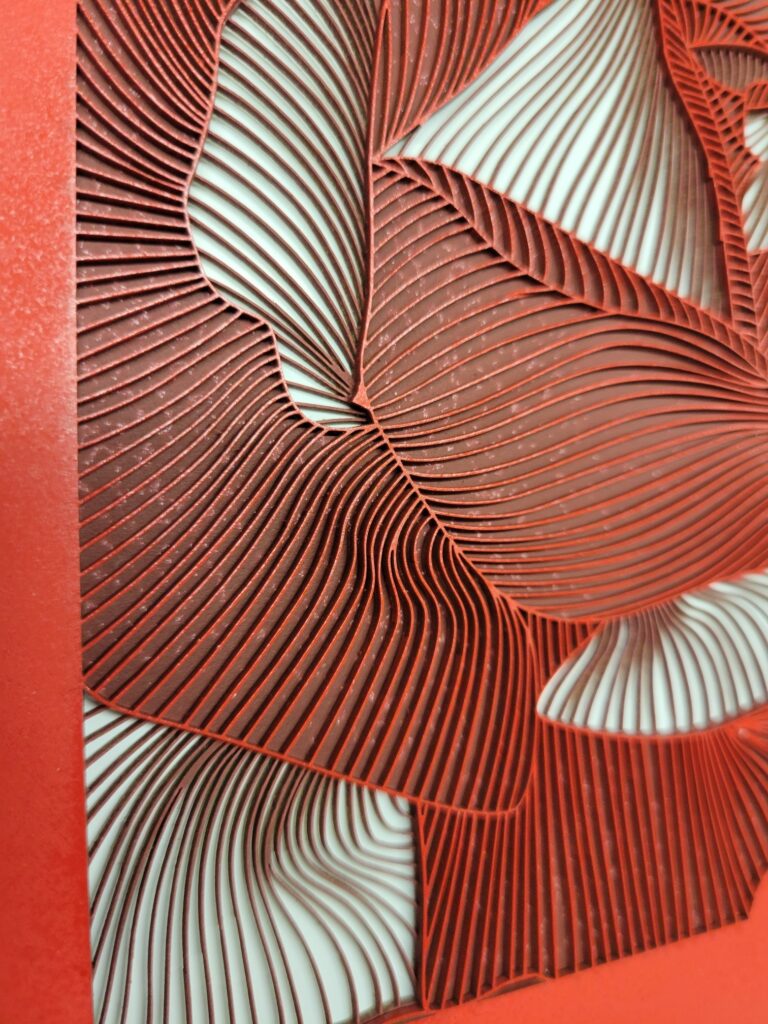
Here, the vector work enables something subtle:

-each layer is individually incomplete
-only together do they form the full image

That layered construction mirrors the meaning: built over time, revealed fully only when everything comes together.
👉https://www.etsy.com/listing/1847552279/multi-layer-paper-cut-judaica-art-bride


What This Shows

SketchBlueStudio’s craftsmanship is what you see. But it’s built on something foundational: vector artwork from Ignition Drawing engineered for real-world production.

We don’t just convert images, we:

-reconstruct them for cutting and layering
-design for precision and scalability
-preserve artistic intent while enabling transformation


The Outcome

On one side: an image. On the other: a system ready to become something real.


From there, it becomes a family tree. A 32-year love story.


That’s the full journey: From image, to vector, to something that lasts.

Previous Article Where Your Art Goes: A Story from Sebago Lake
  Rate this article:

0 / 5. 0

0 comments on article "Where Your Art Goes: From Vector Lines to Living Stories"

Leave a comment

Your email address will not be published. Required fields are marked *

*

Where Your Art Goes: From Vector Lines to Living Stories

Every project starts somewhere simple, often with a reference image. But what happens between that starting point and the final physical artwork is where the real work lives. In this case, that transformation began with Ignition Drawing. Step One: Translating the Image We receive two images from our customer, a rose and a cherry blossom […]

Continue Reading →

Where Your Art Goes: A Story from Sebago Lake

Ignition Impact: Customer Creations At Ignition Drawing, we know our team spends every day creating artwork that fuels thousands of products, including patches, engravings, prints, signage, and more. But what we don’t always see is where those designs end up… or the stories they become part of. Today, we want to share one of those […]

Continue Reading →

The Art of the Dot: Why Halftones Matter More Than You Think

Ever wonder how printers achieve smooth gradients and realistic shading using only one ink color? The secret lies in halftones — the tiny dot patterns that turn solid ink into subtle tonal variations. What are Halftones? Halftones are dot patterns used to simulate tonal variation with a single ink color. By varying dot size and […]

Continue Reading →

Winners of our First Ever Digitize & Win contest!

We’re excited to share the 1st place winner of “Digitize & Win” and it’s easy to see why this design stood out. You no like, you no eat! This embroidered portrait of two gentlemen in their formal best came out beautifully. The suits have great blended detailing that adds nice depth, the faces are clean […]

Continue Reading →

Preparing for the Job: Get Cleaner Embroidery Sew Outs Every Time

Have you ever noticed that your embroidery sew outs on backing material look rough, fuzzy or feathered? This happens because embroidery backing doesn’t have a weave or grain to hold stitches in place. Without this structure, needlepoints shift into nearby holes and bunch up, leaving even the best underlay looking uneven and messy. That’s why […]

Continue Reading →

Vector vs. Raster Art

What Every Customer Should Know for Better Print Results At Ignition Drawing, we believe that great artwork begins with understanding the foundations. Whether you’re designing for embroidery, screen printing, or digital decoration, knowing the difference between vector and raster art is essential. These two image types serve different purposes, and choosing the right one can […]

Continue Reading →

How to Prevent Puckering in Fabrics

Puckering can ruin an otherwise perfect embroidery. Here’s how to avoid it, especially with tricky fabrics like performance wear. 1. Manage Satin Stitches Wide satin stitches (over 4 mm) often cause puckering, especially on stretchy fabrics. Keep stitches under 4 mm to avoid pulling the fabric. The wider the satin stitch, the more likely the […]

Continue Reading →

What fabric type should I choose for my order?

When placing an order for digitizing embroidery, one of the most common questions is, “What fabric type should I choose?” This decision is crucial as it impacts the quality and precision of the embroidery. Understanding the fabric type you will be working with helps us tailor the digitizing process to ensure the best possible results.  […]

Continue Reading →
123456